Recent News
-
 April 21, 2026
 -
 April 20, 2026
Smart Inspection & Incident Management
-
 April 19, 2026
MySecureRide: AI-Powered Transport Management

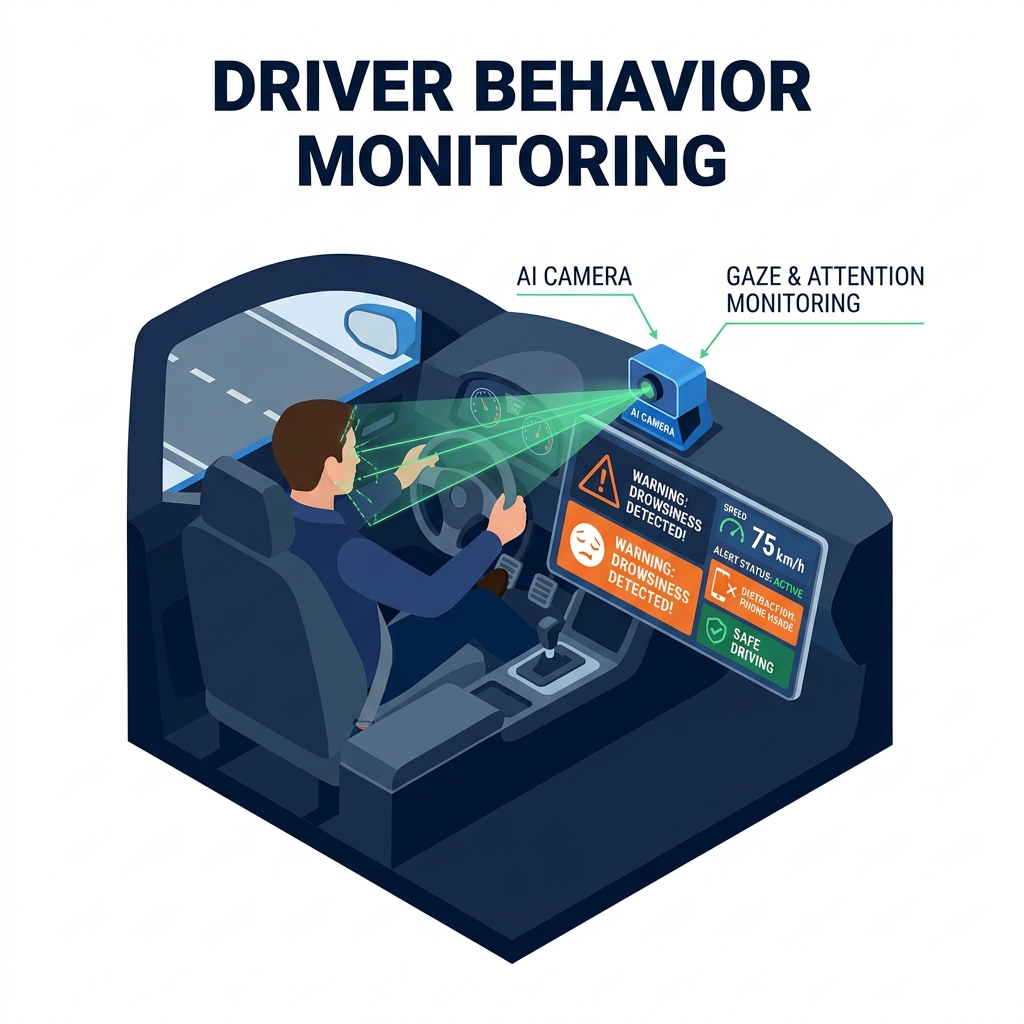
Driving long shifts or operating heavy transport vehicle fleets leaves zero margin for error. Fleet managers have historically tracked vehicle locations, but traditional GPS tracking tools cannot see what is happening inside the cabin. Binimise Driver Behavior Monitoring System (DMS) closes this safety gap by using advanced cabin edge-AI to track fatigue, gaze distraction, phone usage, and identity compliance in real time.
This article reviews how real-time in-cabin auditing works, what key safety metrics the system monitors, and how it helps modern logistics, transit, and municipal services operate safely. Learn more about the technology on our dedicated Driver Behavior Monitoring Service Page.
Traditional telematics systems focus on the vehicle itself—flagging harsh braking, speeding, and route deviations. While these indicators are crucial, they are reactive. A driver who is falling asleep at the wheel or looking down at their phone might not trigger a harsh braking alarm until it is too late.
A proactive safety model requires inside-the-cabin vision. By monitoring the driver's visual focus, posture, and facial fatigue signals, fleets can prevent collisions before they occur.
The Binimise DMS runs high-performance computer vision algorithms locally on vehicle hardware. The local device processes live camera frames from a near-infrared (NIR) cabin-facing camera. NIR technology ensures stable performance regardless of external lighting conditions—operating seamlessly in pitch-black night shifts, dim tunnels, or when the driver is wearing sunglasses.
Because the AI processing runs 100% locally at the edge, the system boasts zero-latency alerts. Drivers receive audio warnings instantly without relying on a stable cellular network signal.
The system constantly monitors four vital metrics to audit driver safety:
Deploying inside-cabin AI tracking provides clear operational benefits:
Enterprise logistics, municipal waste services, and student transport systems use DMS in different ways:
In long-haul cargo transit, drivers run long night hours. NIR-powered drowsiness detection acts as a digital co-driver. For school buses and corporate shuttles, the system combines startup identity checks with on-road distraction auditing to ensure passenger safety and driver accountability.
Traditional vehicle tracking is no longer sufficient to meet modern safety compliance and duty-of-care requirements. Elevating your fleet's safety standards starts with inside-the-cabin visibility.
Contact Binimise today to book a live demo or to co-design a secure cabin-AI workflow for your transport fleet.